Fake E-Challan Message: Real or Fake? How to Check Before Paying
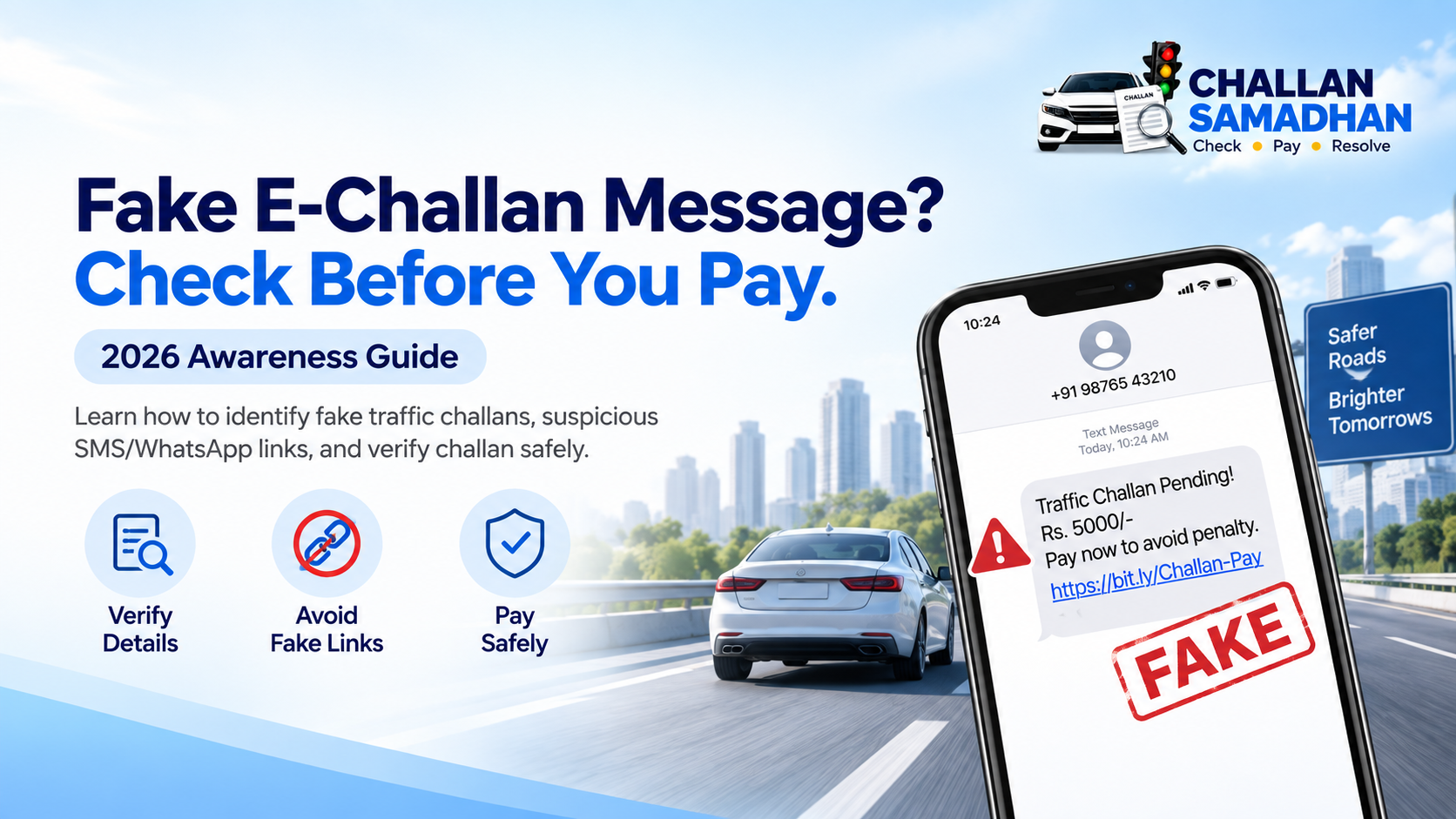
Receiving a fake e challan message has become a serious concern for vehicle owners in India. A message may arrive through SMS or WhatsApp claiming that your vehicle has a pending traffic challan and asking you to make an immediate payment.
The message may look genuine because it can mention words such as RTO, Traffic Police, e-Challan or mParivahan. However, clicking an unknown link or installing an application without verification can put your personal and financial information at risk.
CERT-In has warned about an RTO/eChallan-themed Android malware campaign in which fraudulent messages direct users to malicious APK files with names such as “RTO Challan.apk”, “RTO E Challan.apk” and “MParivahan.apk”.
That is why every vehicle owner should know how to check if an e challan is real before making any payment.
What Is a Fake E-Challan Message?
A fake traffic challan message is a fraudulent communication designed to look like an official traffic or RTO notification.
Fraudsters may send a fake e challan SMS or a fake challan WhatsApp message saying that a traffic violation has been recorded against your vehicle.
The message may ask you to:
- Pay a traffic challan immediately
- Click a payment link
- Download a challan receipt
- Install an APK application
- Enter bank or card details
- Share an OTP or other personal information
A genuine-looking message should never be treated as proof that a challan actually exists. Always perform an independent e challan check before taking action.
Challan Message Real or Fake? Check These Warning Signs
If you are wondering whether a challan message is real or fake, check the message carefully before clicking anything.
1. An APK File Is Attached
One of the biggest warning signs is an APK file sent through WhatsApp, SMS or another messaging platform.
CERT-In has specifically reported malicious files using names such as RTO Challan APK and MParivahan APK. Such files can impersonate legitimate transport-related applications.
Do not install an APK simply because its name contains “RTO”, “Challan” or “mParivahan”.
2. The Message Creates Unnecessary Urgency
An e challan scam may try to scare you with messages such as:
“Pay immediately to avoid legal action.”
“Your vehicle challan is overdue.”
“Download your challan receipt now.”
“Your vehicle services will be blocked.”
Urgency is often used to make people act before checking whether the information is genuine.
3. The Payment Link Looks Suspicious
Before paying an online traffic challan, carefully verify where the payment link leads.
A website may use words such as challan, RTO, transport or Parivahan in its name while still being fraudulent.
Instead of trusting the link received in a message, open the official challan service independently and perform a challan status check.
4. The Message Requests Sensitive Information
Be cautious if a message asks for:
- Banking password
- UPI PIN
- Debit or credit card PIN
- OTP
- Internet banking credentials
- Unnecessary personal information
These details should not be shared simply to check whether you have a pending traffic challan.
How to Check if E-Challan Is Real
If you receive a traffic challan message, do not immediately pay through the link provided.
Follow these steps instead.
Step 1: Check Your Vehicle Details
Confirm whether the registration number mentioned in the message actually belongs to your vehicle.
Even if the vehicle number is correct, continue with independent verification.
Step 2: Perform an Independent E-Challan Check
Open the official government e-Challan service yourself instead of clicking the link in the SMS or WhatsApp message.
Search using the available vehicle or challan information and review the actual challan status.
The national e-Challan system provides web-based challan viewing and payment functionality for public users.
Step 3: Match the Challan Information
Check important information such as:
- Vehicle registration number
- Challan number
- Offence date
- Location
- Violation or offence
- Fine amount
- Current challan status
If the information shown in the message does not match the official challan details, do not make payment through that message.
What Is the Fake mParivahan Challan APK Scam?
A fake mParivahan challan scam can involve a malicious application designed to resemble an official transport application.
CERT-In's March 2026 advisory states that attackers have circulated files with names such as “MParivahan.apk”, “RTO Challan.apk” and similar variations as part of an Android malware campaign targeting users in India.
Once installed, malicious software can potentially compromise the device and expose sensitive information.
Therefore:
Do not install challan APK files received through WhatsApp, SMS or unknown links.
If you need a government application, access it independently through an official source rather than through an unsolicited message.
How to Check Fake Challan Before Making Payment
If you are searching for how to check fake challan, follow one simple rule:
Never verify a suspicious message using the same link provided inside that message.
Verify the information independently.
For example, if an SMS says you have a ₹5,000 challan, do not assume the amount is genuine. Check the challan separately using the vehicle number or challan number.
A proper traffic challan check online can help you confirm whether the challan exists and whether the displayed details match your vehicle.
What If a Challan Is Genuine?
Not every challan message is fraudulent.
If your independent e challan check confirms that a genuine pending challan exists, review:
- Challan amount
- Offence details
- Payment status
- Court status, if applicable
- Available payment or resolution options
Do not ignore a genuine challan simply because you first suspected the message might be fraudulent.
The key difference is verification before payment.
What If the Challan Details Are Wrong?
Sometimes a challan may exist but you may believe that its details are incorrect.
Examples can include:
- Wrong vehicle
- Incorrect registration number
- Incorrect offence
- Incorrect location
- Duplicate challan
- Challan already paid but status not updated
In such situations, preserve the challan details and relevant evidence and use the applicable official grievance or legal process.
Do not make a payment to an unknown person claiming that they can “remove” or “cancel” the challan without a legitimate process.
What to Do If You Clicked a Fake Challan Link
If you clicked a suspicious link but did not enter any information, close the page and avoid downloading any file.
If you installed an unknown APK, entered banking credentials or made a payment, take immediate precautions.
You should consider:
- Contacting your bank or payment provider
- Changing compromised passwords
- Checking your bank transactions
- Removing suspicious applications
- Preserving screenshots and transaction details
- Reporting the incident to the appropriate cybercrime authority
India's National Cyber Crime Reporting Portal states that financial cyber fraud can be reported immediately through the 1930 cybercrime helpline.
How to Report Traffic Challan Fraud
If you become a victim of traffic challan fraud, keep as much evidence as possible.
Save:
- Fraudulent SMS
- WhatsApp message
- Sender's phone number
- Suspicious website link
- Screenshots
- Payment receipt
- UPI or transaction ID
- Bank transaction details
- Name of any APK or application downloaded
The National Cyber Crime Reporting Portal also provides facilities to report suspicious website URLs, WhatsApp numbers, phone numbers, email IDs and SMS identifiers.
Quick reporting can be important, particularly when financial fraud has occurred.
How to Stay Safe From E-Challan Scams
The safest approach is simple:
Check first. Verify second. Pay only after confirmation.
Whenever you receive a challan message:
- Do not panic.
- Do not immediately click the link.
- Never install an unknown challan APK.
- Perform an independent e challan check.
- Compare the vehicle and offence details.
- Use a trusted payment channel.
- Save the payment receipt after successful payment.
These basic checks can significantly reduce the risk of falling victim to an e challan scam.
Check Your Pending Traffic Challan Before Paying
Whether you receive an SMS, WhatsApp message or another challan notification, verification should always come first.
A fake e challan message can look convincing, while a genuine challan can also require timely attention. Checking your vehicle's challan information helps you understand the actual status before deciding what action to take.
At Challan Samadhan, vehicle owners can check their challan information and understand the available process for eligible challans.
Check your challan before you pay.
Challan Check Karo, Safar Raho Befikar.
Frequently Asked Questions
How do I know if an e-challan message is fake?
Do not rely only on the SMS or WhatsApp message. Independently check the challan using official or trusted challan verification channels and compare the vehicle number, challan number, offence, date and fine amount.
Is an e-challan APK sent on WhatsApp safe?
An unsolicited APK should be treated with caution. CERT-In has warned about malicious RTO/eChallan-themed APK files impersonating transport-related applications.
Can I check a traffic challan using my vehicle number?
Available challan-checking services may allow challan information to be searched using vehicle or challan-related details, depending on the service and jurisdiction.
What should I do if I paid money through a fake challan link?
Contact your bank or payment provider promptly and report financial cyber fraud through the National Cyber Crime Reporting Portal or helpline 1930.
Should I ignore a challan if I think it is wrong?
No. First verify the challan details. If a genuine challan record exists but you believe it is incorrect, use the applicable official grievance or legal process rather than simply ignoring it.